
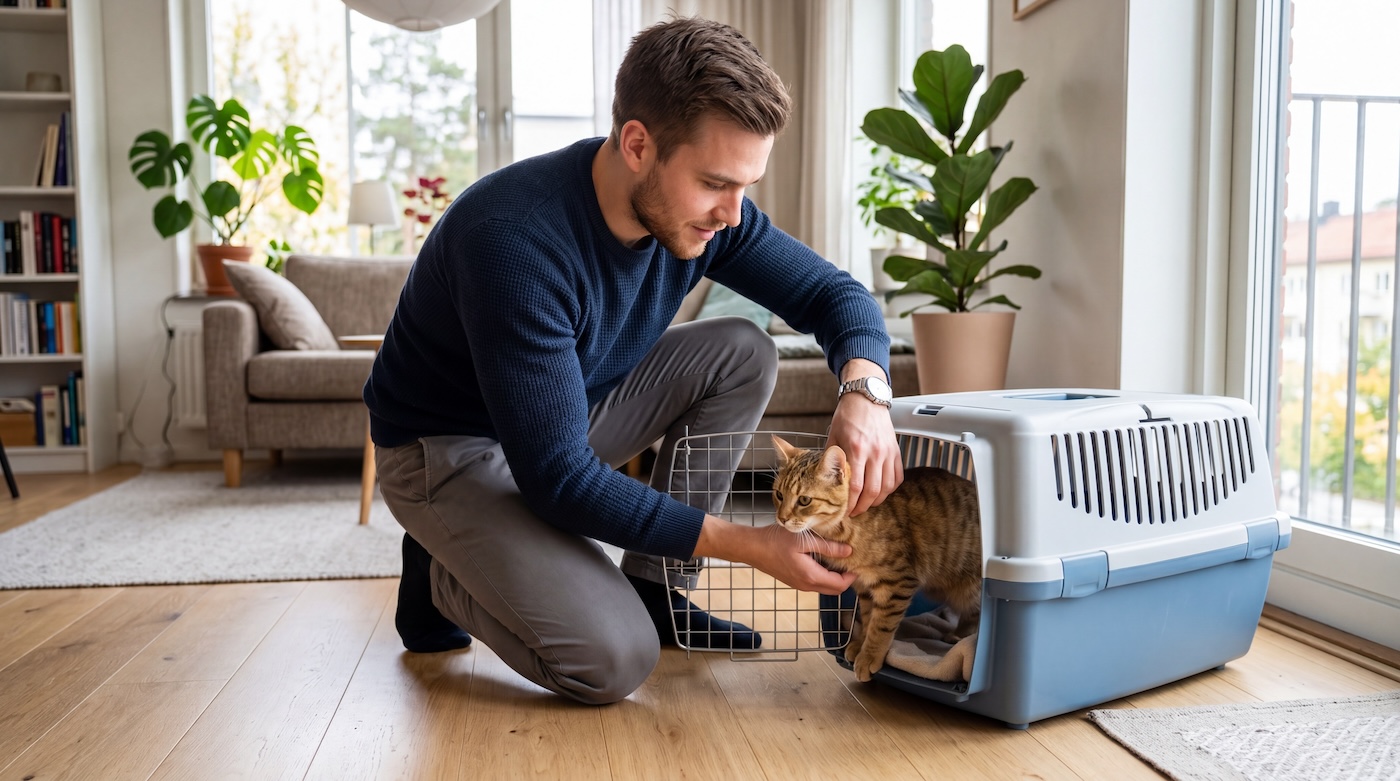
The Cat Carrier Question: Hard vs. Soft
Whether you’re taking your cat to the veterinarian, traveling across town, or evacuating during an emergency, a good cat carrier is one of the most important pieces of equipment you can own. But with so many styles and designs available, how do you know which one is best?
The right carrier should do more than simply contain your cat. It should provide a safe, comfortable, secure space that makes transportation less stressful for both you and your feline companion.
Here’s what to look for when choosing between a hard-sided or a soft cat carrier.
1. Hard-Sided Carriers: The Best All-Around Choice
For most cats, a hard-sided plastic carrier is the best choice. These carriers offer excellent protection, are easy to clean and disinfect, and hold their shape even when your cat is nervous or moving around. Plastic carriers also resist wear and tear and last for many years.
Look for a carrier with:
- A top opening: This is one of the most useful features. It allows your veterinarian to examine your cat while they remain comfortably in the bottom half of the carrier.
- Multiple access points: A carrier with both a front door and a top opening makes getting your cat inside much easier.
- Secure door latches: Make sure the door closes firmly and cannot be easily pushed open.
- Good ventilation: Openings on multiple sides provide adequate airflow.
- A sturdy handle: The carrier should remain balanced and secure when lifted.
Hard-sided carriers are particularly useful for veterinary visits, where cats may be frightened and reluctant to leave their familiar surroundings.
A carrier should be large enough for your cat to:
- Stand comfortably without crouching.
- Turn around without difficulty.
- Lie down in a natural position.
However, bigger isn’t always better. A carrier that is excessively large may allow your cat to slide around during transportation.
For longer trips, make sure there is enough room for comfortable positioning and, when appropriate, a small absorbent pad.
If you have a growing kitten, consider purchasing a carrier that will accommodate their adult size.
2. Soft-Sided Carriers: Are They a Good Option?
Soft-sided carriers are lightweight, often more portable, and can be easier to store. Some cats enjoy the cozy, enclosed feeling they provide. However, they have several disadvantages that are worth considering before making a purchase.
One significant concern is durability. Cats have sharp claws and can tear through mesh fabric, particularly if they become frightened and struggle to escape. A damaged mesh panel can create an opportunity for a cat to escape during transportation.
Soft-sided carriers can also be much more difficult to use with a reluctant or frightened cat. Unlike hard-sided carriers, which maintain their shape and have a rigid opening, soft carriers can collapse or shift while you’re trying to get your cat inside. Once the cat is in the carrier, closing the zippers can become a challenge if they are trying to jump out, push against the opening, or squeeze through before the zipper is fully closed.
Other potential drawbacks include:
- Too small for many cats to stand in and/or turn around.
- Less protection from bumps or accidental impacts.
- Fabric and mesh can be difficult to thoroughly clean and disinfect after accidents.
- Zippers may be pushed open by determined cats.
- The carrier can collapse or become misshapen during handling.
- Mesh panels may be vulnerable to scratching, clawing, and tearing.
If you choose a soft-sided carrier, look for a sturdy frame, reinforced or heavy-duty mesh, locking zippers, and a removable, washable interior pad.